From Spreadsheets to Software: Why Nonprofits Are Rethinking Compliance Management
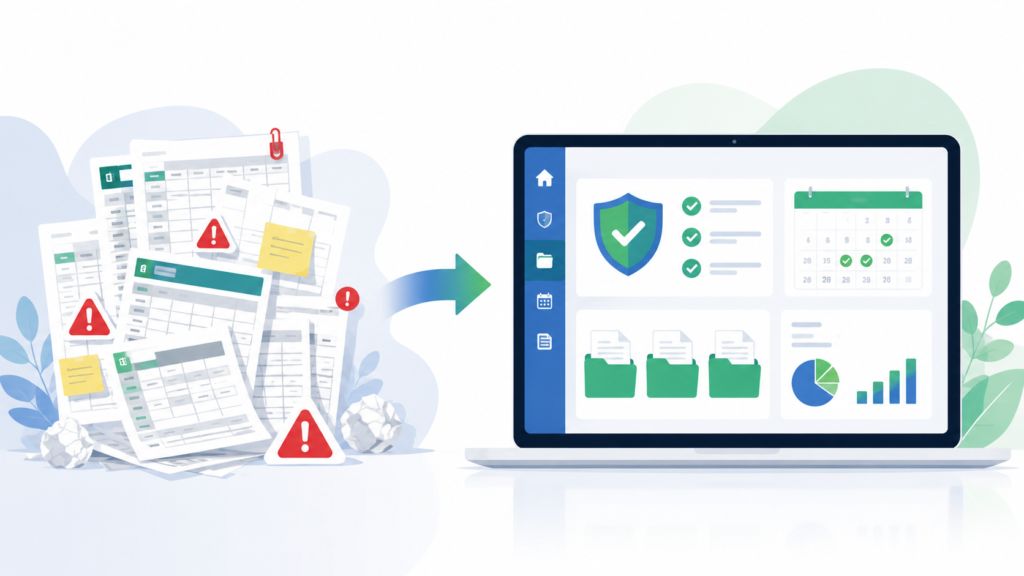
If you run compliance for an NGO, trust, or Section 8 company in India, chances are your entire audit trail lives in a handful of Excel files — one for FCRA returns, one for board meeting minutes, one for 12A/80G renewal dates, one for donor records. It works, until the day it doesn’t: a missed CSR-1 filing, a lapsed 80G validity, or a auditor asking for a document that’s buried three folders deep on someone’s laptop.
This is one of the most common questions we hear from nonprofit leaders: is it worth moving from spreadsheets to a dedicated compliance platform, and what does that transition actually look like?
Why Spreadsheets Struggle as Nonprofits Grow
Spreadsheets are flexible and familiar, which is exactly why so many organisations start there. But they were never built for regulatory compliance, and the cracks tend to show in predictable ways:
- No automated reminders. A spreadsheet doesn’t alert anyone when a Trust Registration renewal, FCRA annual return (FC-4), or 12A/80G re-validation deadline is approaching. That responsibility sits entirely on one person remembering to check.
- Version control chaos. When multiple team members update the same file, conflicting versions and accidental overwrites are common — especially damaging when the file in question is your compliance calendar.
- Poor audit readiness. Auditors and regulators increasingly expect a clean, traceable record of filings, approvals, and board resolutions. Reconstructing this from scattered files during an audit is time-consuming and risky.
- Single point of failure. If the one person who understands the spreadsheet system leaves the organisation, institutional knowledge often leaves with them.
- No linkage between compliance and documentation. A spreadsheet can tell you a filing is due, but it can’t store the supporting documents, track approval workflows, or flag when a related registration (like FCRA) affects another (like 80G).
None of this means spreadsheets are a bad starting point — for a small, single-state organisation with a handful of compliances, they can work fine for a while. The friction usually appears as the organisation scales: more registrations, more states, more funders, more reporting obligations.
What Changes With a Dedicated Compliance Platform
Nonprofit compliance platforms are built around the specific regulatory calendar that Indian NGOs, trusts, and Section 8 companies operate under — FCRA, 12A/80G, CSR-1, annual ROC filings, state-level trust laws, and more. The shift typically brings a few concrete improvements:
1. A single source of truth. Every registration, renewal date, and filing status lives in one place, visible to everyone who needs it — not just the person who built the spreadsheet.
2. Automated deadline tracking. Instead of relying on memory or manual calendar entries, the system flags upcoming deadlines well in advance, reducing the risk of lapses that can jeopardise tax exemptions or foreign funding eligibility.
3. Document repository tied to compliance items. Board resolutions, audited financials, and filing acknowledgements get attached directly to the relevant compliance record, so nothing is scattered across email threads and personal drives.
4. Workflow and approval trails. Larger organisations especially benefit from being able to route documents for review and sign-off, with a clear record of who approved what and when — useful both internally and for statutory audits.
5. Easier handovers. Because the system holds the institutional knowledge rather than one person’s spreadsheet habits, staff transitions become far less disruptive to compliance continuity.
Is the Switch Worth It?
For very small organisations with light compliance obligations, a well-maintained spreadsheet with strict discipline can still get the job done. But for most growing nonprofits — particularly those handling foreign contributions, multiple state registrations, or CSR funding — the return on moving to a dedicated platform tends to show up quickly: fewer missed deadlines, faster audit preparation, and less compliance risk sitting on any single individual’s shoulders.
The transition itself is usually less disruptive than organisations expect. It typically involves:
- Migrating existing registration and renewal data into the new system
- Setting up reminders against your organisation’s actual compliance calendar
- Uploading historical documentation so past records are searchable
- Training the team responsible for day-to-day compliance tracking
Getting It Right From the Start
Whether you’re still managing compliance in spreadsheets or actively evaluating a platform, the underlying goal is the same: making sure your organisation’s legal and regulatory obligations are met on time, every time, without depending on any one person’s memory.
At Legalease Compliance, we work with nonprofits across India to bring structure to exactly this kind of transition — mapping out your compliance calendar, organising your documentation, and helping you choose or implement the right systems for your organisation’s size and complexity.
If you’re weighing up whether it’s time to move beyond spreadsheets, it’s worth starting with an honest audit of your current compliance gaps — that alone often makes the decision clear.